In the pristine waters of Gold Beach, Oregon, Kirk Potocarrero of Gold Beach Salmon Fishing expertly guides anglers in pursuit of the region’s most prized aquatic treasures.1 The primary focus of these expeditions is a celebrated species known for its impressive size and spirited fight. These fish embark on a remarkable journey from the vast Pacific Ocean to the freshwater rivers of the area, offering a world-class fishing experience.
Anglers aboard with Captain Potocarrero can anticipate the thrill of targeting these magnificent fish, which are a hallmark of the Pacific Northwest’s rich fishing heritage.2 The season for pursuing these powerful swimmers is a significant event in Gold Beach, drawing fishing enthusiasts eager to connect with a truly iconic species. The experience of battling and landing one of these remarkable fish against the backdrop of Oregon’s stunning coastal scenery is an unforgettable adventure.
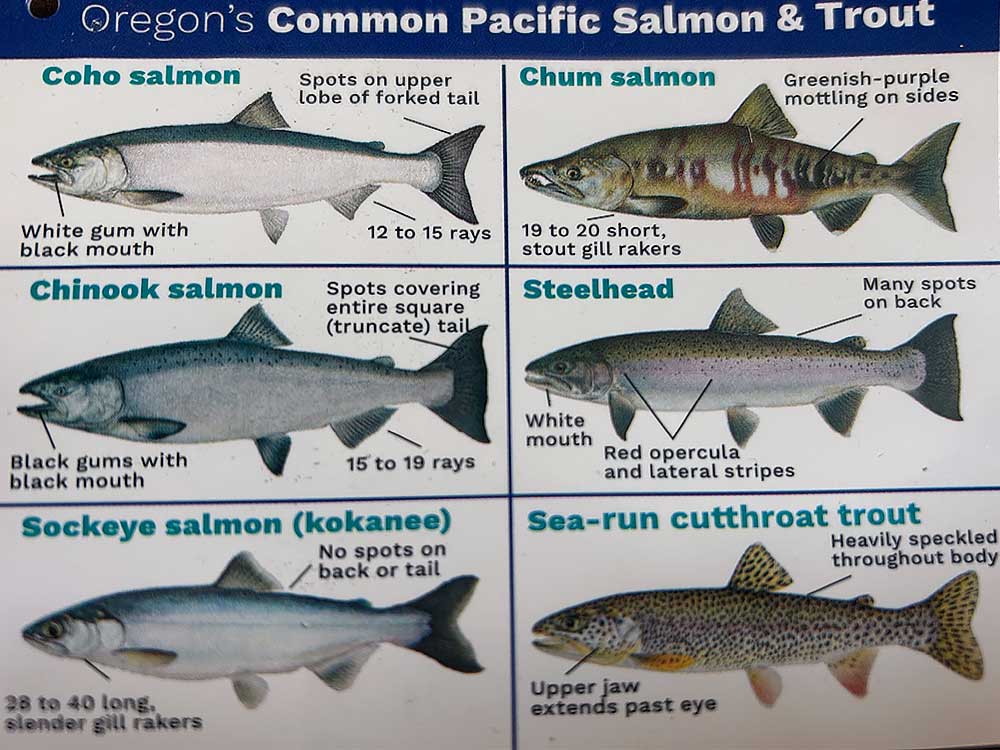
Coho Salmon
Dark spots on back. Spots on upper lobe of tail only. Whitish gums in black moutn. 12 to 15 rays in anal fin. Spawning adults have olive-colored backs and reddish sides.
Chinook Salmon
Dark, irregular spots. Black gums in black mouth. Spots covering entire square (truncate) tail. 15 to 19 rays in anal fin.
Sockeye Salmon (kokanee)
No distinct spots on back or tail. Spawning adults are reddish with distinct green heads. Have long, slender gill rakers underneath gill coverings (opercula).
Chum Salmon
No distinct spots on back or tail. Spawning adults have distinctive greenish-purple mottling on sides. Have short, stout gill rakers underneath gill coverings (opercula).
Steelhead
See rainbow trout. Ocean and early returning steelhead are uniformly silver with dark backs. Spawning steelhead develop distinct coloration with more distinctive spots, red opercula, and lateral stripes.
Sea-run Cutthroat Trout
Upper jaw extends past eye. Heavily speckled with dark spots. Red to orange “slashes” underneath lower jaw. 9 to 11 dorsal fin rays.